Colder than zero? That works.
In Antarctica it was once almost 90 degrees below zero. Nobody has ever measured anything colder on Earth.
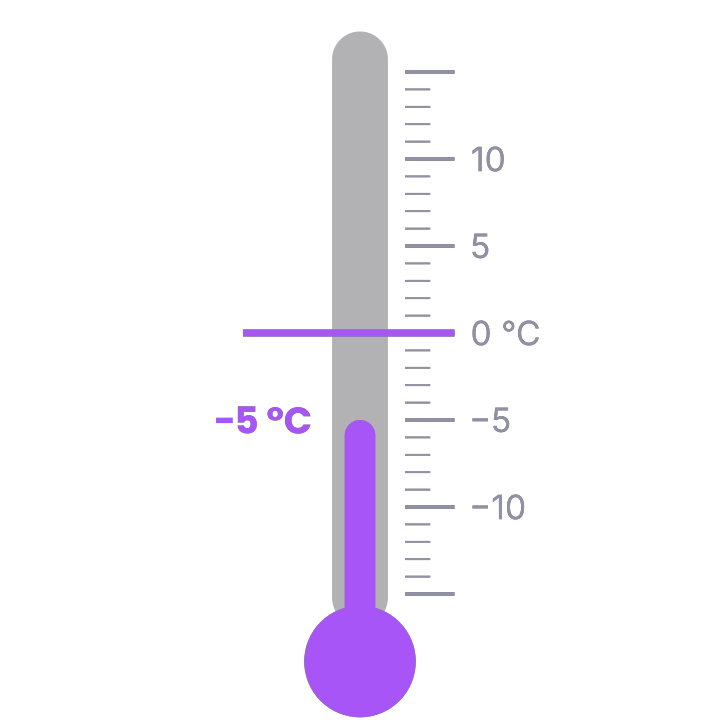
How do you write that as a number? Look at a thermometer. In the middle there is a line. That is where the 0 is. If it is colder than 0 degrees, the column is below this line. Then you write a minus in front of the number.
So 5 degrees below zero is °C. Numbers with a minus are called negative numbers. Numbers above zero are called positive numbers.
The freezer is 18 degrees below zero. How do you write that as a number?
Type your answer, for example −5. Then check.
°C. “Below zero” means a minus goes in front.
Zero is not nothing
With gummy bears, 0 means there are none. With temperature it is different. At 0 degrees it is still cold. That is exactly when water turns into ice.
Here, zero is a line. From this line you count up and down. You find a zero line like this in many places.
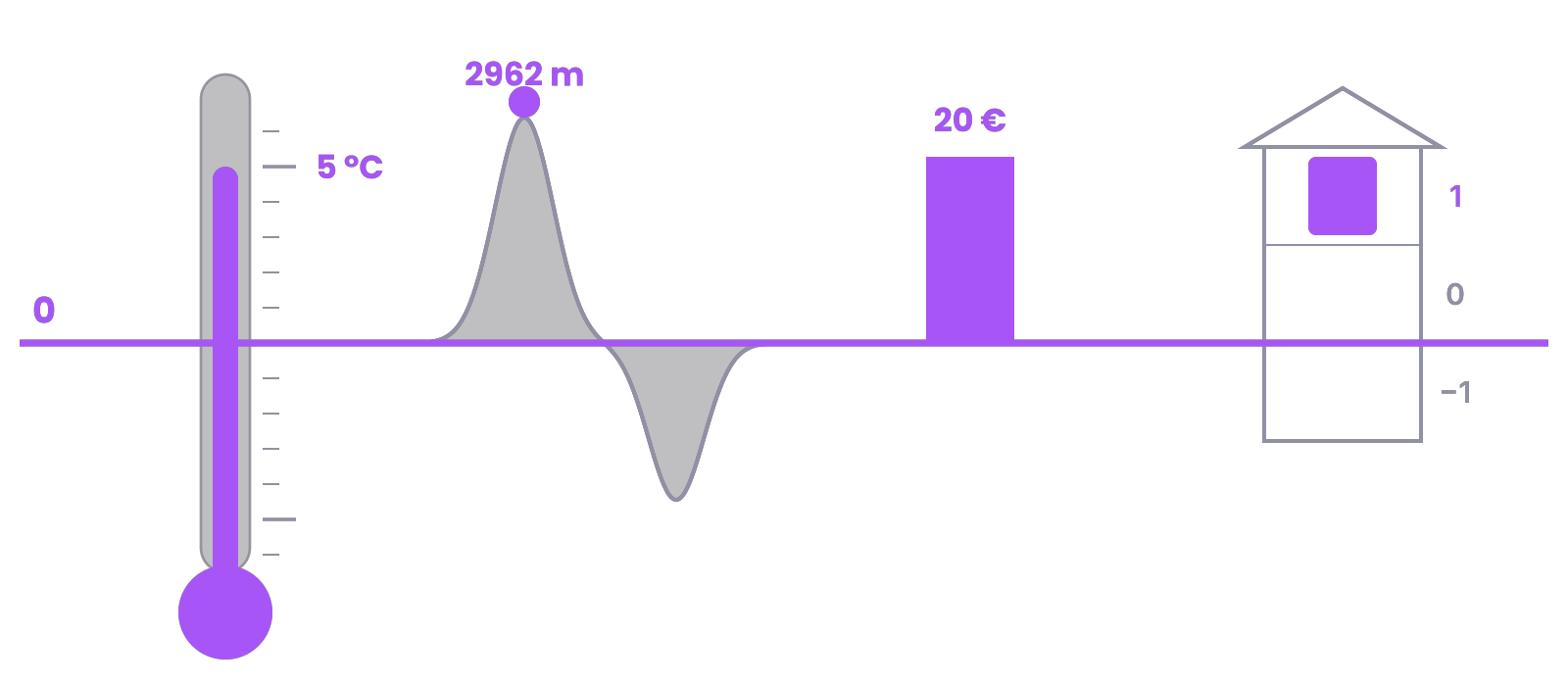
- Thermometer
At °C water turns into ice. Below that it is minus degrees.
- Map
m is the height of the sea, called sea level. Germany’s highest mountain, the Zugspitze, is m high. The shore of the Dead Sea is at m.
- Bank account
€ means you have nothing and you owe nothing. If you owe the bank 20 €, it says €.
- Lift
is the ground floor. The car park below is .
The minus hides in words
In everyday life hardly anyone says “minus”. People say words like below, deeper or debt. These words mean minus. Watch out for them when you read.
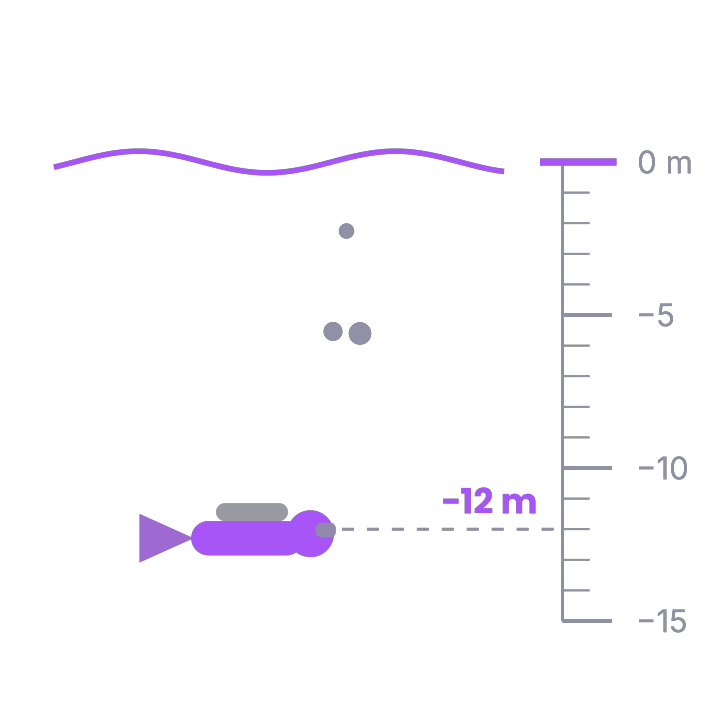
- A diver is 12 m below the water.
- Lena has 15 € of debt.
- The deepest spot in the sea is about 11,000 m deep.
- Outside it is 12 degrees above zero.
The minus sticks to the number
You know the minus from doing sums. means: take 3 away. With it is different. Here you do not calculate anything.
The minus sticks to the 7. It only says: this number is below zero. A minus like this is called a sign. is a normal number. It is 7 steps below zero.
Is a number missing in front of ?
Choose an answer. Then check.
No. is a complete number. The minus belongs to the 7.
Why −10 is less than −2
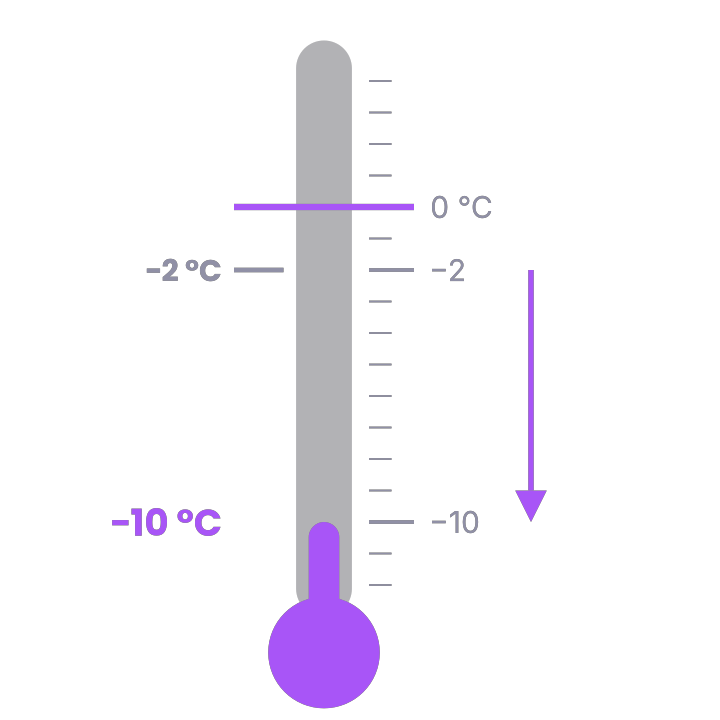
Which is colder: °C or °C? At °C it is colder. You need the thicker coat.
Still, many people think: 10 is more than 2, so is more. That is not true. Look at the thermometer. is further down than . Further down means colder and less.
A submarine is at m. A diver is at m. Who is deeper?
Choose an answer. Then check.
The submarine. is further down than . So is the smaller number.
Where are you – and which way?
These two sentences sound almost the same. But they mean different things.
“It is °C.” That is a value. It tells you where the temperature is right now.
“The temperature drops by 3 degrees.” That is a change. It tells you that it gets 3 degrees colder.
An example: in the morning it is °C. Then the temperature drops by 3 degrees. Now it is °C. It is not °C.
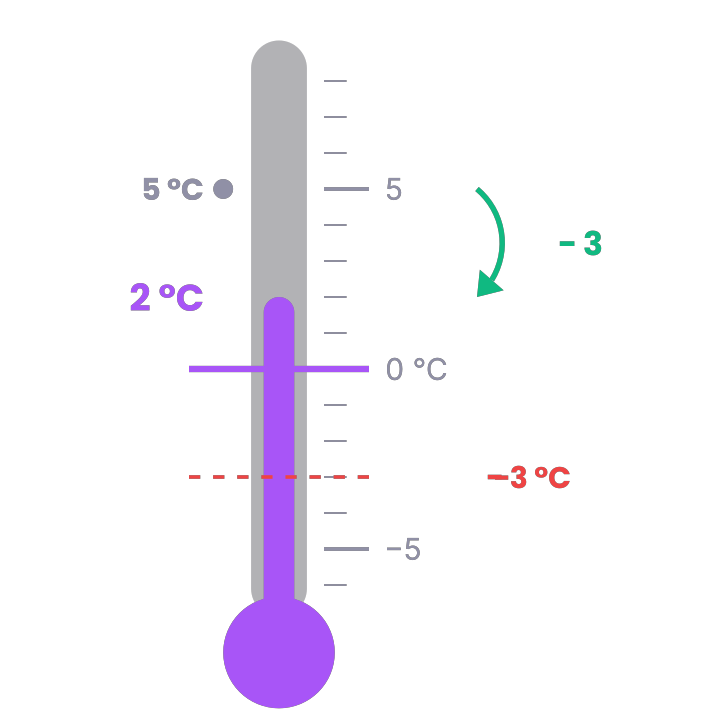
In the afternoon it is °C. By the evening the temperature drops by 4 degrees. How warm is it in the evening?
Type your answer, for example −5. Then check.
°C. You go 4 steps down from . °C would be wrong.
Try it
Questions from the app, right here. In the app they reshuffle every time.
The ground floor is 0. The elevator stops at underground level 2. Which number is on the display?
Choose an answer. Then check.
The ground floor is the starting line, the zero. An underground level lies below it — and everything below zero is negative. Underground level 2 is 2 floors below the ground floor, so the display shows −2. The number 2 without a minus would be a floor above the ground floor, and 0 would be the ground floor itself.
- Set the reference point: the ground floor is 0.
- An underground level lies below 0, so the number is negative.
- Underground level 2 is 2 floors lower: the display shows −2.
The thermometer shows −3 °C. Mark this value on the scale.
Drag the column to the right spot. Then check.
Zero is the starting line of the scale. From it things go in two directions: to the positive numbers on one side and to the negative ones on the other. The minus in front of the 3 tells you that you have to go to the side of the negative numbers. From zero you then go 3 steps further — that is exactly where −3 is. The steps stay the same size beyond zero too: the scale does not stop at zero, it simply continues.
- First find zero — it is the starting line.
- The minus shows you the direction: you have to go to the side of the negative numbers.
- From zero go 3 steps in that direction and place the marker.
Water freezes at 0 °C. It is another 20 degrees colder in the freezer. What is the temperature as a number?
Type your answer, for example −5. Then check.
Here the direction is not in a short word like "below" but in a comparison. The reference point is 0 °C, freezing point — the starting line of the scale. "Colder" or "less" than 0 °C means on the thermometer: below zero. So 20 degrees colder than 0 °C is −20 °C. The common mistake is to read only the number 20 and skip the comparison — then the sign is missing. Remember: direction words carry the sign: "below", "deeper", "debt" mean minus.
- Find the reference point: 0 °C, freezing point.
- Determine the direction: "colder" or "less" than 0 °C means further down on the thermometer.
- Go 20 steps down from 0 and write −20.
What comes next
- The number line